

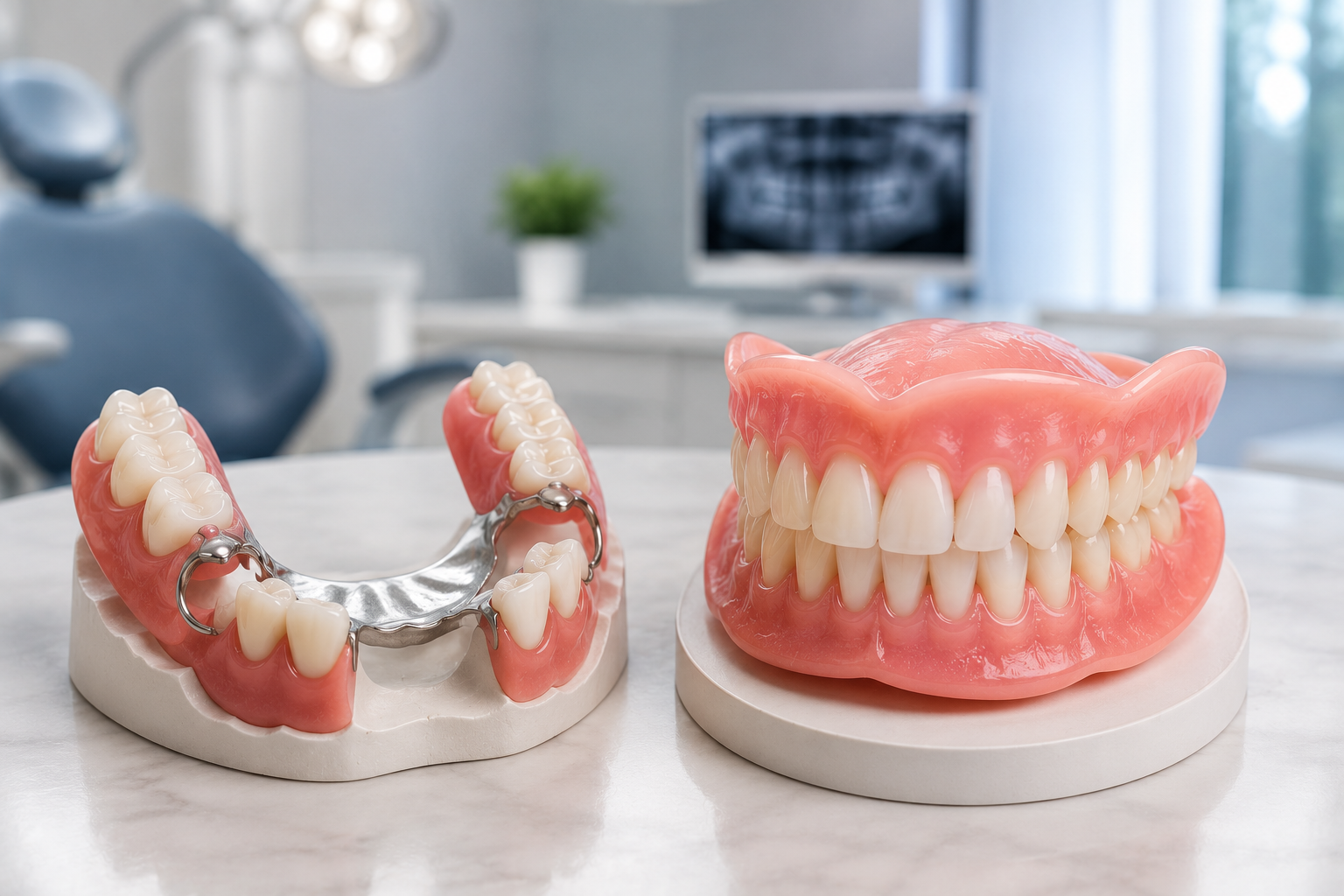
Choosing the right way to replace missing teeth depends entirely on how many teeth you have left in your mouth. If you still have several healthy teeth, partial dentures can fill the gaps and keep your remaining teeth from shifting. However, if you have lost all your teeth on your upper or lower jaw, full dentures in Miami offer a complete replacement to restore your smile and chewing ability.
What Are the Main Differences Between These Two Options?
When you lose teeth, it can affect how you talk, eat, and feel about your smile. Dentists use custom-made removable appliances to help you get your mouth back to full function. The main difference lies in how many teeth need replacement and what holds the appliance in place.
Having new dentures for missing teeth supports your facial muscles and the ability to eat the right foods to lead a healthy life. Both types are tailor-made to fit the contours and shade of your mouth.
How Do Partial Dentures Work?
Partial dentures are designed for people who still have some of their natural teeth remaining. These appliances consist of replacement teeth attached to a pink plastic base that mimics the look of your natural gums.
The Structure of Partials
The device itself is normally secured with a metal frame or flexible material that’s not visible behind the teeth. It clips onto the existing, healthy teeth so the device can’t slip out when you speak or eat.
Why Choose a Partial?
- They stop your remaining natural teeth from moving out of place.
- They distribute chewing forces evenly across your jaw.
- They are easy to remove for nightly cleaning.
Many people choose partial dentures in Miami because they offer a reliable and cost-effective way to restore a smile without removing healthy teeth.
How Do Full Dentures Work?
Full dentures, which people also call complete dentures, replace an entire row of teeth on the top, bottom, or both jaws. This option is suitable when no natural teeth are left, or when the remaining teeth are too damaged to save.
The Design of Full Appliances
A top denture will fit like a cover over the roof of your mouth, and a bottom denture is horseshoe-shaped so as to allow your tongue space. The top denture will be secured in place through natural suction, while the bottom denture is secured by your cheek muscles and tongue.
What to Expect During the Process
If you need any damaged teeth removed, your gums will require time to heal before the final appliance is fitted. This healing process ensures that your new teeth sit comfortably on your gums without causing sore spots.
Many patients seek out partial and full dentures near you to find a long-term solution that helps them speak clearly and eat comfortably again.
Comparing Your Options Side by Side
To help you understand which choice might suit your current oral health situation best, you can look at how they compare across different categories.
| Feature | Partial Dentures | Full Dentures |
| Number of Teeth Replaced | A few missing teeth in a row | An entire upper or lower arch |
| How It Stays in Place | Clips onto existing natural teeth | Natural suction and muscle control |
| Main Benefit | Preserves your remaining healthy teeth | Provides a brand-new set of teeth |
| When to Choose It | When you have strong teeth left | When all teeth are missing or damaged |
How Long Do These Appliances Last?
It’s important that both kinds of devices be kept clean and maintained so that they will appear and feel well throughout your life. The size and shape of your jawbone will change as you age, and both appliances may require modification to continue to fit well.
Tips
- Rinse your device after every meal to avoid collecting any residue.
- Clean with a soft-bristle toothbrush and mild cleaning solution daily.
- Soak overnight in clean water or a cleaning solution.
Visiting a dentist near you for routine checkups ensures that your appliance continues to fit well and does not cause irritation to your gums.
Making the Best Choice for Your Health
Your bone structure, the health of your remaining teeth, and your personal preferences all play a role in this decision. A detailed examination allows a dental professional to evaluate the strength of your jawbone and the health of your gums.
Finding reliable partial and full dentures near you can make the transition much easier as you receive guidance through every step of the process.
Your Path to a Refreshed Smile
Taking care of your oral health is an important step toward supporting your overall well-being and confidence. At Caring Dental Services Miami, the team focuses on providing personalized, compassionate care tailored to your unique needs.
If you are ready to explore your options for tooth replacement, reach out to schedule a consultation and learn how a custom treatment plan can help you achieve a comfortable, functional smile.
Frequently Asked Questions
Can I wear my dentures while I sleep at night?
It is generally recommended to remove them at night to let your gum tissues rest and recover.
Will wearing these appliances change how I speak?
You might need a few weeks to practice reading aloud, but your speech will adapt to the appliance quickly.
How often do I need to have my appliance adjusted?
Most people need a professional check and potential adjustment every few years due to natural mouth changes.
Is it hard to eat normal foods with new appliances?
Starting with soft foods cut into small pieces helps you adapt before moving on to harder textures.